
Description
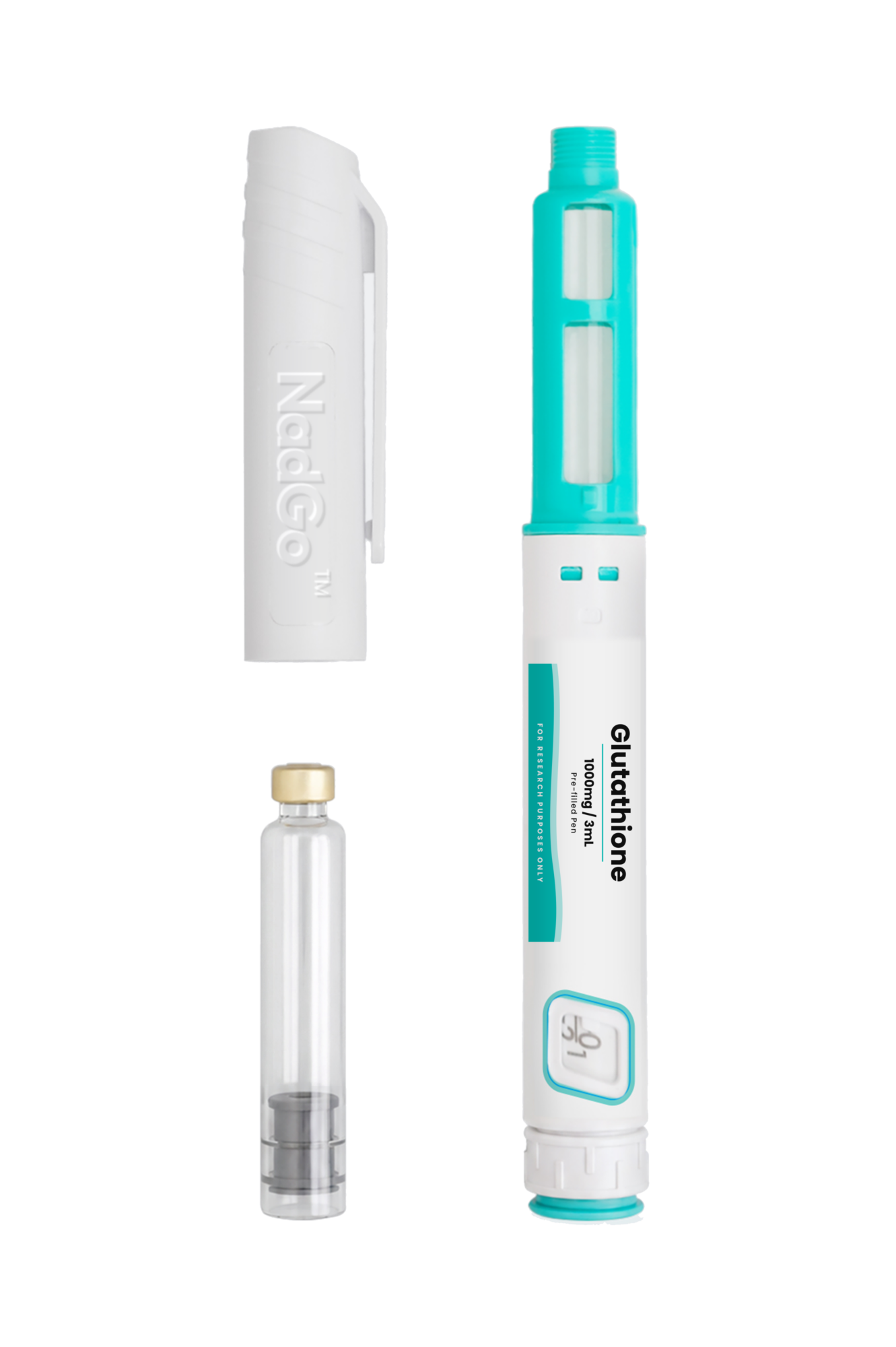
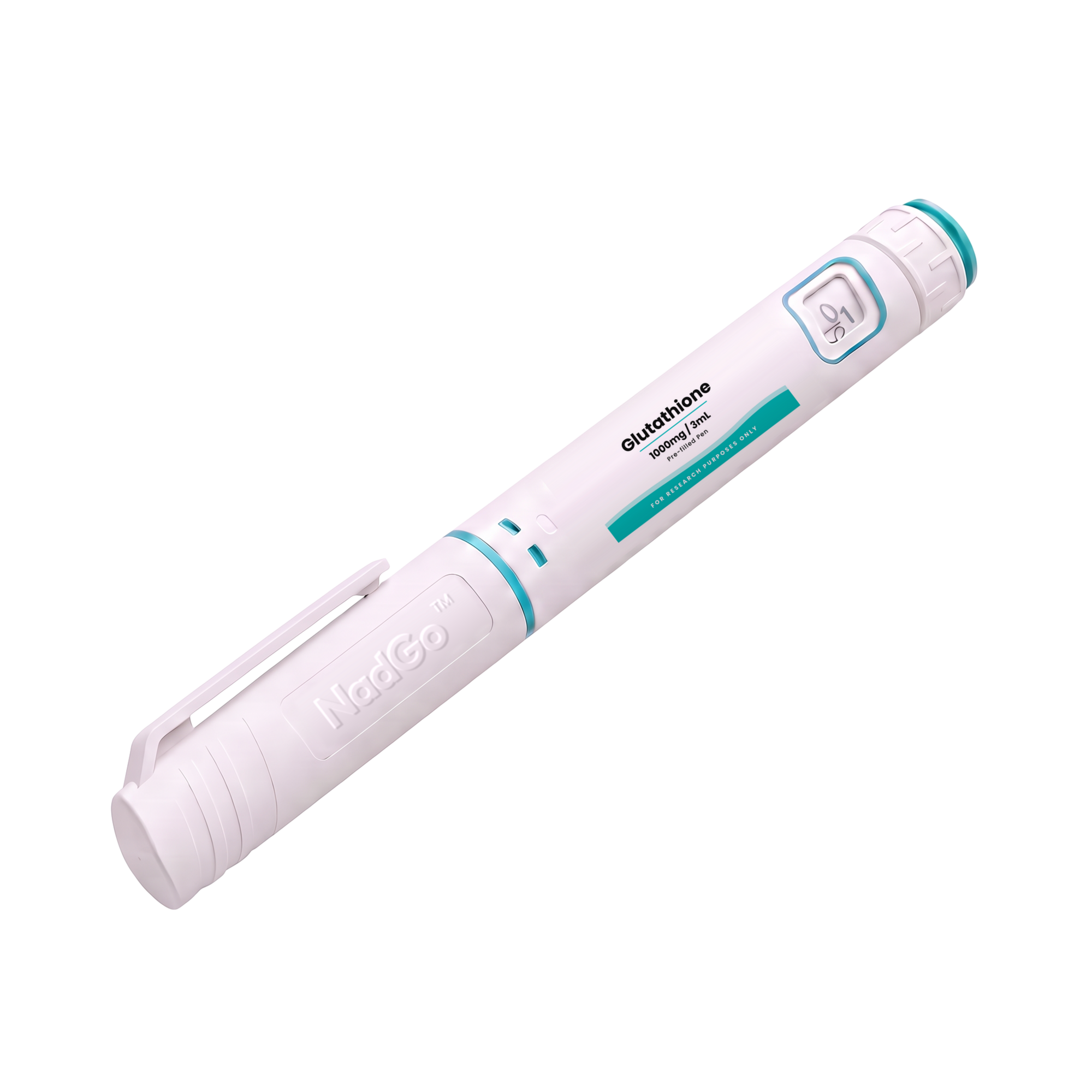
Overview of NadGo™ Glutathione
Glutathione is the most abundant intracellular antioxidant there is, and it is thoroughly characterised in biochemistry. Unlike many molecules studied in this field, its function is not in doubt. What remains genuinely open is delivery: whether glutathione administered from outside the cell reaches the intracellular compartments where it does its work.
Mechanism of Action
Glutathione is a tripeptide, gamma glutamyl cysteinyl glycine, assembled inside the cell across two ATP dependent steps. It acts as the principal cellular thiol antioxidant, as substrate for the glutathione peroxidases that reduce hydrogen peroxide, and as cofactor in phase II detoxification by way of the glutathione S transferases. The ratio between its reduced and oxidised forms, GSH against GSSG, is a determinant of cellular redox potential.
The gamma peptide bond gives the molecule resistance to ordinary peptidases. Even so, extracellular degradation and limited uptake of the intact molecule are both well documented, and they are the reason delivery is the central research question here.
Why This Molecule Is Researched
- Study of the GSH and GSSG couple as a determinant of cellular redox potential
- Research into phase II detoxification by way of the glutathione S transferases
- Investigation of extracellular degradation and how much intact molecule reaches the cell
- Comparison of direct administration against cysteine donor approaches
- Examination of pigmentation endpoints in dermatological research
In the research literature
Glutathione appears across published work in redox biochemistry, detoxification pathways and oxidative stress. These are descriptions of independent research fields, not claims about this product.
Areas of Research Interest
Redox Biochemistry
Foundational characterisation of the GSH and GSSG couple and of cellular redox potential.
Detoxification Research
An extensive body of phase II conjugation work by way of the glutathione S transferases.
The Delivery Question
Studies of extracellular degradation and of how limited the uptake of intact glutathione is.
Precursor Comparison
Research setting direct administration against cysteine donor approaches.
Dermatological Research
Trials examining pigmentation endpoints, conducted primarily in East Asian populations.
Oxidative Stress
The molecule serves as a reference point across oxidative stress work, given its role as principal cellular thiol antioxidant.
What The Research Has Shown
Glutathione is one of the better settled molecules in this catalogue. Its role as the principal cellular thiol antioxidant, its function as substrate for the glutathione peroxidases, and its part in phase II detoxification are all thoroughly characterised, as is the use of the GSH to GSSG ratio as a measure of cellular redox state.
The open question is delivery rather than biology. Extracellular degradation is documented, uptake of the intact molecule is limited, and a separate line of research compares supplying glutathione directly against supplying cysteine donors instead. Dermatological trials examining pigmentation endpoints, largely in East Asian populations, form a further distinct strand.
These are observations drawn from laboratory research settings, not approved medical, cosmetic or therapeutic claims. The information is provided for analytical reference only and is not guidance for use.
Composition and Suggested Measures
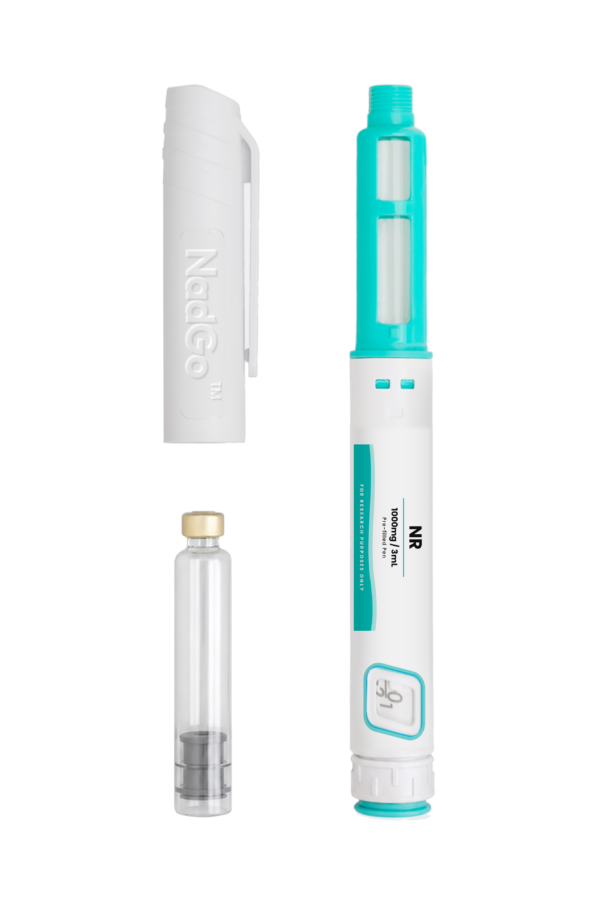
Each NadGo™ Glutathione Pen holds 1000 mg across 3 ml, a concentration of approximately 333 mg/ml, dispensed over 300 units. The figures below reflect commonly reported resear
ch handling measures and are provided for reference only.
Pen Information
- Total content: 1000 mg
- Volume: 3 ml
- 300 units per pen
- 1 unit = approx 3.33 mg
Unit Conversion
- 1 unit = approx 3.33 mg
- 3 units = approx 10 mg
- 15 units = approx 50 mg
- 30 units = approx 100 mg
Setting The Quantity
- Turn the dial until the required number of increments is selected.
- Rotate clockwise to increase the quantity.
- Rotate counter-clockwise to decrease the quantity.

Reviews
There are no reviews yet.