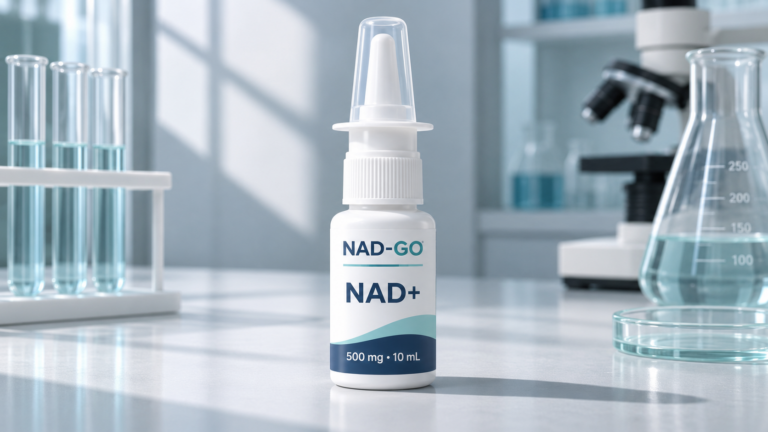
When your NAD-GO NAD+ Nasal Spray arrives, check the bottle label and any accompanying product instructions before putting it into storage. Record the batch reference and the expiry or retest date if one is stated. If your team plans to use the same bottle across several laboratory sessions, check whether the instructions specify a separate storage condition or time limit after opening.
This guide covers the NAD-GO spray bottle sold under product code NASAL-SPRAY. For the formulation and dispensing details, see the NAD-GO NAD+ Nasal Spray product page.
Does the NAD-GO spray need to be refrigerated?
Check the storage temperature specified for your spray bottle. If the label or accompanying paperwork leaves the temperature unclear, email info@nad-go.com with the product code and batch reference before choosing a storage location.
Our pre-filled NAD+ pens and our spray have separate formulations and packaging. Use the instructions specific to the spray when setting up a receiving or storage procedure. Our NAD+ spray vs pen guide explains the differences between the two formats.
How do I check the shelf life of my NAD-GO spray?
Look for an expiry or retest date on the label or in the accompanying documentation. Record the date using the wording supplied. If your team needs to know how long the bottle can be kept after opening, check for a separate instruction covering opened bottles. Where that information is unclear, contact us with the batch reference and the date the bottle was first opened, if applicable.
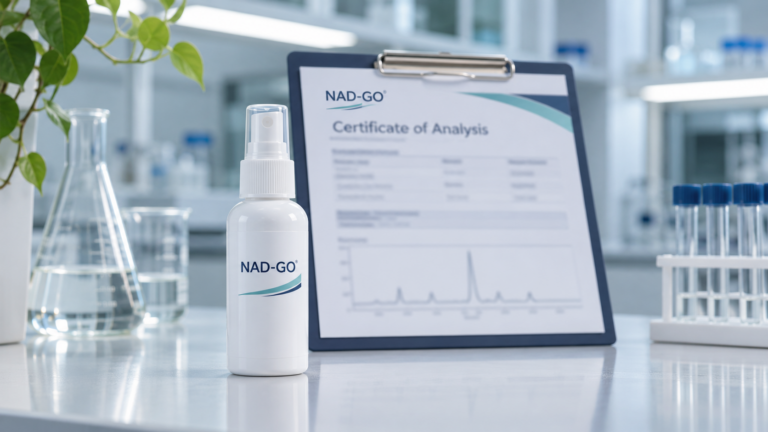
The batch certificate serves a different purpose. It identifies the sample tested and records the analytical results reported for that sample. For storage and shelf life, use the product instructions applicable to your bottle. To check how the analytical paperwork relates to your batch, see our NAD-GO spray Certificate of Analysis guide.
What should a research team record when the spray arrives?
| Record | What to capture for the NAD-GO spray |
|---|---|
| Product and batch | NASAL-SPRAY, the batch reference and the date received |
| Storage conditions | The temperature or other conditions stated in the applicable instructions |
| Date on the label | Any expiry or retest date, recorded as labelled |
| First opened | The date, if relevant to your protocol, and any stated after-opening limit |
| Delivery condition | Any visible damage or suspected temperature excursion to raise with NAD-GO |
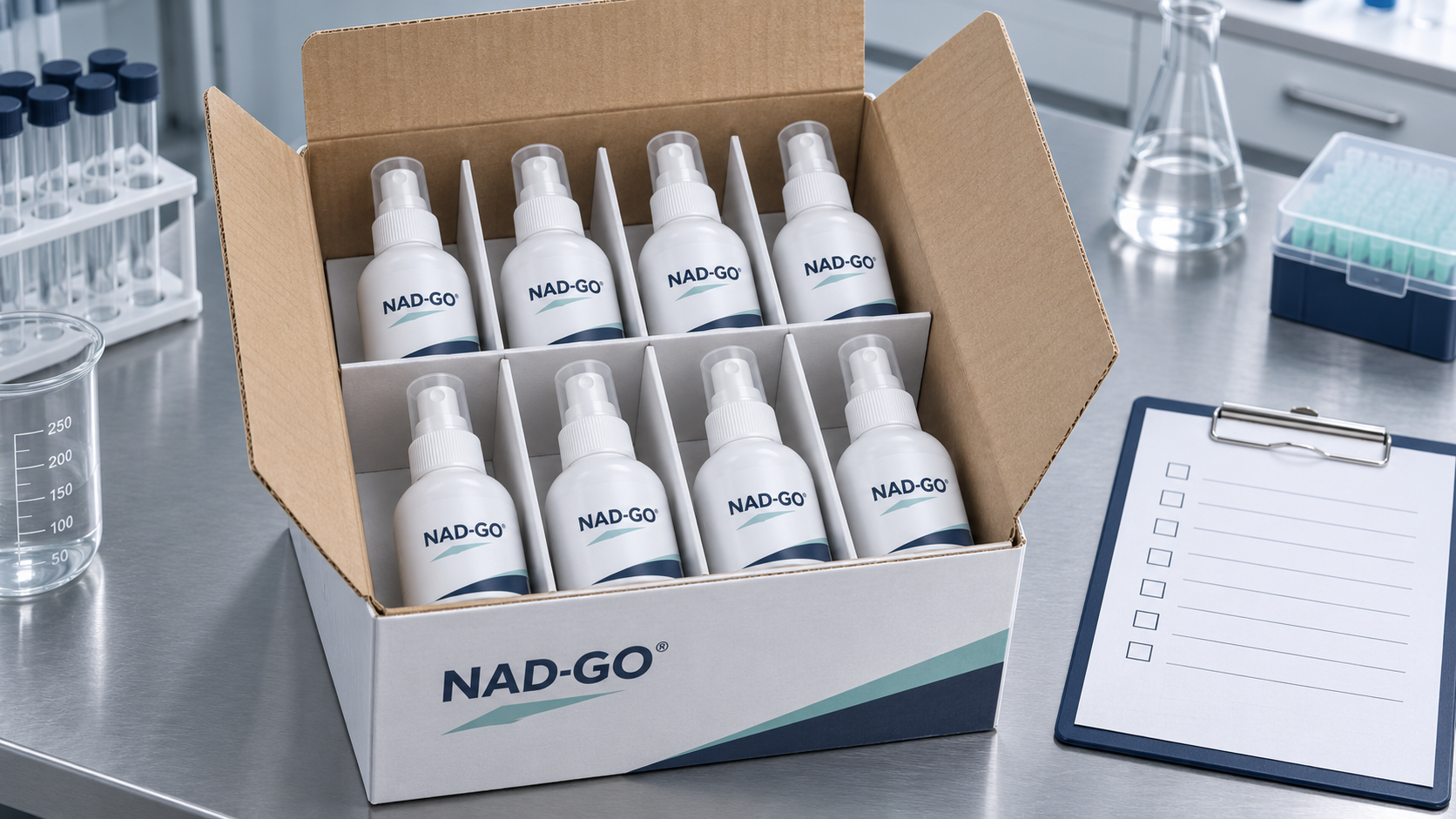
If a shipment arrives damaged or you suspect it was held outside the specified conditions, record what happened and contact us before incorporating the affected bottles into your study. Include your order number, batch reference and any temperature records or photos you have.
Where can I get storage information before ordering?
If you need to check whether your lab can store the spray under the required conditions, ask for the current instructions before placing your order. For larger or staged orders, include that request with your quantities and delivery dates. Our NAD-GO spray procurement guide lists the details to send with a bulk enquiry.
For the formulation science behind these questions, see Why NAD+ Nasal Spray Stability Depends on More Than Purity.
The NAD-GO NAD+ Nasal Spray is supplied exclusively for laboratory and scientific research. It is not intended for human or veterinary administration.