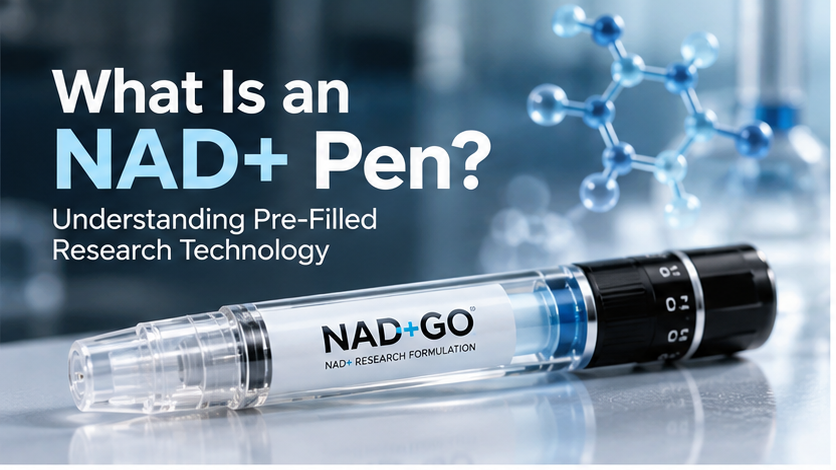
An NAD+ pen is a cartridge-based device containing a prepared solution of nicotinamide adenine dinucleotide (NAD+), with an integrated mechanism for dispensing controlled quantities of liquid.
Unlike conventional laboratory vials, which generally rely on separate liquid-handling equipment, a pen combines the formulation, cartridge and mechanical dispensing system in a single unit.
At NAD-GO, our pre-filled NAD+ research pens are available in three strengths: 200mg, 500mg and 1000mg. Each incorporates a liquid formulation and adjustable click-dial mechanism designed for repeatable laboratory dispensing.
The important distinction, however, is not simply the shape of the container. Understanding a research pen requires examining its chemical formulation, cartridge specifications and mechanical performance separately.
What Is Inside an NAD+ Research Pen?
The active compound is nicotinamide adenine dinucleotide, an essential coenzyme involved in cellular metabolism.
Within living cells, NAD+ participates in oxidation-reduction reactions, acting as an electron acceptor and converting to its reduced form, NADH. It is also a substrate for enzyme families involved in cellular signalling and maintenance, including sirtuins and poly(ADP-ribose) polymerases.
These established biochemical functions explain the considerable research interest in NAD+.
Our NAD+ science and benefits resource explores these biological pathways in greater detail. The role of NAD+ within cells should not be confused with evidence that a commercially supplied research formulation produces particular health outcomes.
In a pre-filled pen, NAD+ is dissolved in a formulated liquid medium and housed inside an integrated cartridge.
The cartridge is then paired with a mechanical dispensing device.
How Does the Click-Dial Mechanism Work?
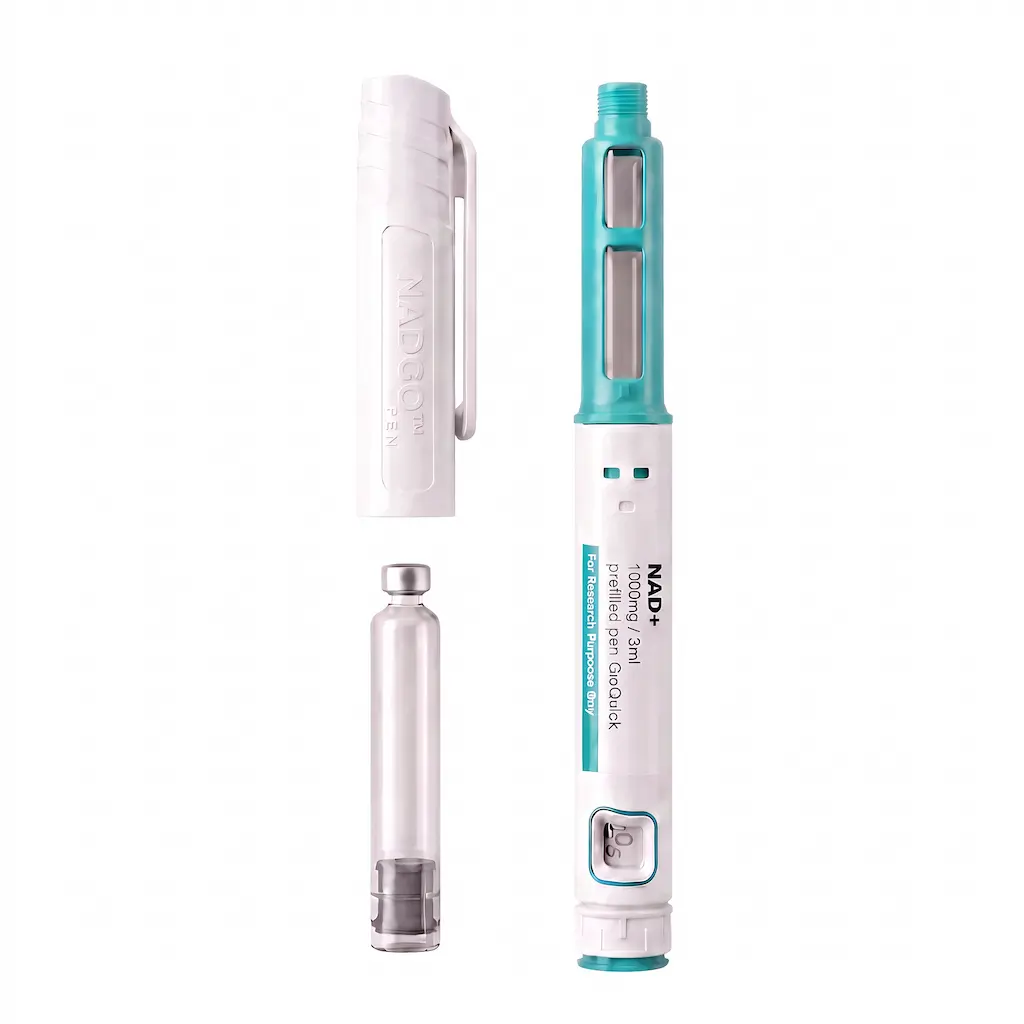
A typical pen mechanism converts an adjustment of the selector into controlled movement of an internal plunger.
As the plunger advances, it displaces liquid within the cartridge.
The resulting volume depends on the device’s mechanical construction and calibration.
This creates an important distinction between three concepts:
Dispensing resolution describes the smallest adjustment the mechanism is designed to make.
Repeatability describes how consistently the device can deliver the same volume under comparable conditions.
Accuracy describes how closely the delivered volume matches the intended volume.
A pen can have a finely adjustable mechanism without necessarily having independently verified accuracy to the same degree.
At NAD-GO, we describe our click-dial system as designed for consistent laboratory dispensing. Precise performance tolerances should be interpreted according to the particular device’s validated specifications.
The NAD-GO Pen Range
Our NAD+ research pen collection contains three distinct formulations.
| Pen strength | Cartridge volume | Nominal concentration |
|---|---|---|
| 200mg | 2ml | 100mg/ml |
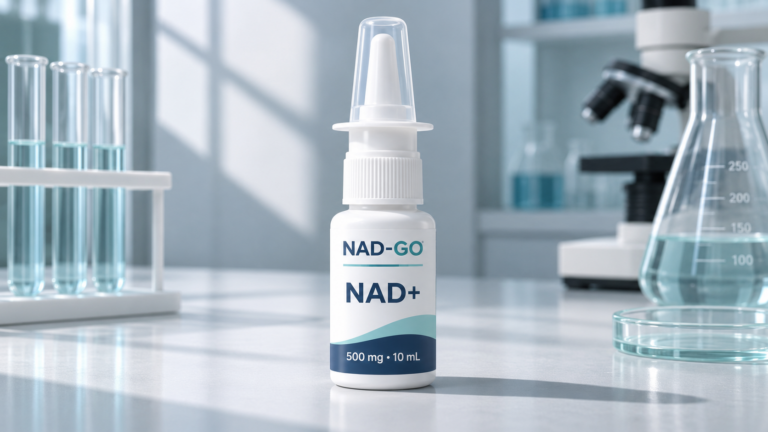
| 500mg | 3ml | 166.7mg/ml |
| 1000mg | 3ml | 333.3mg/ml |
Each formulation contains the same underlying coenzyme but differs in total content and concentration.
The 500mg and 1000mg pens, for example, contain the same total liquid volume, but the latter is twice as concentrated.
This matters when comparing research formulations because strength, concentration and dispensing volume are not interchangeable measurements.
Why Use a Pre-Filled Formulation?
A conventional NAD+ laboratory preparation may begin with crystalline or lyophilised material that must be dissolved in a suitable medium.
With a pre-filled pen, the manufacturer establishes the starting liquid formulation before supply.
This removes certain preparation stages for laboratory work compatible with the supplied formulation.
It also places greater importance on the manufacturer’s formulation controls, concentration verification and batch documentation.
A pre-filled product may simplify handling, but it does not eliminate the need for appropriate laboratory procedures.
Nor does a sealed cartridge automatically establish sterility or suitability for clinical administration.
From Pre-Mixed Pens to Dual-Chamber Technology
Our existing research pens contain prepared liquid formulations.
We are also developing a dual-chamber auto-mixing NAD+ pen that uses a different approach.
The proposed dual-chamber system separates freeze-dried NAD+ from its liquid diluent until an internal mixing mechanism is activated.
This design aims to combine the storage characteristics of a dry formulation with integrated reconstitution and dispensing.
The dual-chamber pen is currently in development and is not part of our available pre-filled range.
Its final specifications and performance characteristics will need to be assessed when the development and validation process is complete.
Why Product Documentation Matters
A research pen should be evaluated on more than the concentration printed on its cartridge.
Relevant information includes chemical identity, analytical purity, batch traceability, formulation details and the specifications of the dispensing mechanism.
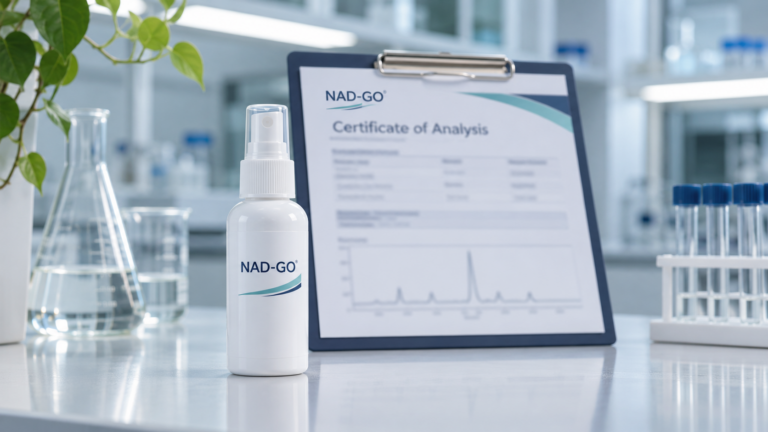
NAD-GO states a minimum NAD+ purity specification of 99.99% and provides batch-specific Certificates of Analysis.
Our certifications and compliance framework explains how supplier qualification, documented procedures and GMP-aligned controls fit into our approach to research-product quality.
GMP-aligned does not mean that NAD-GO itself holds formal GMP certification.
Choosing the Right Research Format
An integrated pen format may be relevant where a research workflow requires a prepared solution and mechanical dispensing.
For experiments requiring a custom solvent, particular buffer chemistry or specialised analytical equipment, a conventional vial may offer greater flexibility.
The correct choice depends on experimental requirements rather than assumptions that one packaging format is inherently superior.
About NAD-GO
Our work at NAD-GO focuses on high-purity NAD+ research products, specialist dispensing technology and transparent product specifications.
You can learn more about our approach on the About NAD-GO page, or explore additional scientific and manufacturing topics in our Research Journal.
The fundamental principle is straightforward: a well-designed pen is only one part of a reliable research product. The chemistry, formulation, documentation and measurement characteristics all matter.
All NAD-GO research pens are supplied strictly for laboratory and scientific research, not for human or veterinary administration.